
| Westminster (2-5-1) | 57-0 | |
| at Navy (6-3-1) | 20-19 | #25 |
| at Syracuse (5-4) | 30-0 | (#26-35) |
| Penn (7-3-1) | 20-0 | #13 |
| Allegheny (4-2-1) | 46-0 | |
| Washington & Jefferson (8-2) | 37-0 | #16 |
| Carnegie (4-3) | 14-6 | (#36-60) |
| Penn State (8-2) | 31-0 | #20 |
| Susquehanna (4-5) | 34-0 | |
| Maine (0-4-3) | 28-0 | |
| at Illinois (3-3-1) | 15-3 | (#26-35) |
| Rhode Island (3-4-1) | 33-0 | |
| Springfield (5-2-1) | 27-14 | (#36-60) |
| at Yale (8-1) | 3-7 | #5 |
| at Syracuse (5-4) | 15-0 | (#26-35) |
| at Brown (8-1) | 28-0 | #4 |
 For
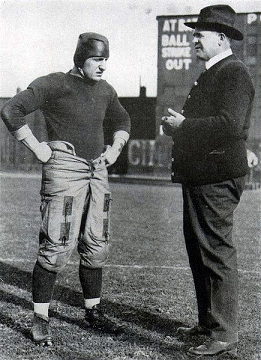
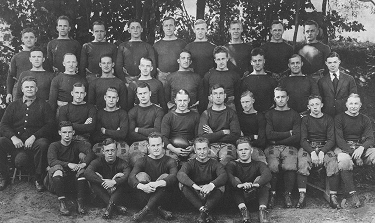
years Colgate had been the little team that could, and was already a
bit of a darling in the Eastern press, all thanks to head coach
Laurence Bankart, a Dartmouth grad who went 28-7-3 in his short career
at Colgate in 1910 and 1913-1916. In his first year, Colgate beat
Syracuse and tied 7-2-1 Brown. After 2 years off, Bankart returned in
1913, and his team tied Cornell and beat Yale, finishing 6-1-1. By this
point, everyone was aware of them, but they beat 8-2 Cornell in 1914,
and they beat Army and Yale in 1915, finishing 5-1.
Colgate would continue to field strong teams through 1932, when they
went 9-0, earning a national championship selection for that season
from Parke Davis.
For
years Colgate had been the little team that could, and was already a
bit of a darling in the Eastern press, all thanks to head coach
Laurence Bankart, a Dartmouth grad who went 28-7-3 in his short career
at Colgate in 1910 and 1913-1916. In his first year, Colgate beat
Syracuse and tied 7-2-1 Brown. After 2 years off, Bankart returned in
1913, and his team tied Cornell and beat Yale, finishing 6-1-1. By this
point, everyone was aware of them, but they beat 8-2 Cornell in 1914,
and they beat Army and Yale in 1915, finishing 5-1.
Colgate would continue to field strong teams through 1932, when they
went 9-0, earning a national championship selection for that season
from Parke Davis.
| Lebanon Valley (5-4-1) | 3-0 | |
| Washington & Lee (5-2-2) | 14-7 | #24 |
| Holy Cross (4-5) | 17-0 | |
| Trinity-Connecticut (1-5) | 53-0 | |
| Villanova (1-8) | 69-7 | |
| Notre Dame (8-1) | 30-10 | #12 |
| Maine (0-4-3) | 17-3 | |
| Springfield (5-2-1) | 17-2 | (#36-60) |
| (NYC) Navy (6-3-1) | 15-7 | #25 |
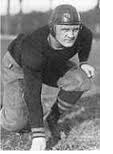 Army went 9-0, just as they had in 1914,
and I covered their coach, Charles Daly, in that article. This was an
almost completely different team from the 1914 edition, but Hall of
Fame center John McEwan still manned the middle. He had been a
consensus All American in 1914, but was relegated to the second team by
Pitt's Hall of Fame center Bob Peck in 1915 and 1916. McEwan later
coached successfully at Army, Oregon, and
Holy Cross.
Army went 9-0, just as they had in 1914,
and I covered their coach, Charles Daly, in that article. This was an
almost completely different team from the 1914 edition, but Hall of
Fame center John McEwan still manned the middle. He had been a
consensus All American in 1914, but was relegated to the second team by
Pitt's Hall of Fame center Bob Peck in 1915 and 1916. McEwan later
coached successfully at Army, Oregon, and
Holy Cross.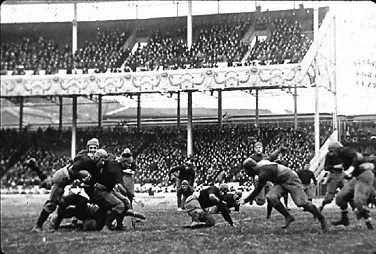
| Pittsburgh 8-0 | Colgate 8-1 |
Army 9-0 | |||||||||||||||||||||||||||||||||||||||||||||||||||
|---|---|---|---|---|---|---|---|---|---|---|---|---|---|---|---|---|---|---|---|---|---|---|---|---|---|---|---|---|---|---|---|---|---|---|---|---|---|---|---|---|---|---|---|---|---|---|---|---|---|---|---|---|---|
|
|
|
|||||||||||||||||||||||||||||||||||||||||||||||||||
| Willamette (4-2) | 97-0 | |
| Multnomah AC | 28-0 | |
| at California (6-4-1) | 39-14 | |
| Washington (6-0-1) | 0-0 | #7 |
| (Portland) Washington State (4-2) | 12-3 | |
| at Oregon State (4-5) | 27-0 | |
| at Multnomah AC | 27-0 | |
| Rose Bowl Penn (7-3-1) | 14-0 | #13 |
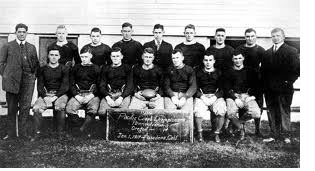 Oregon was headed up by Hall of Fame coach Hugo Bezdek, who had been born in Prague, and had been the fullback for Chicago's 1905
national championship team. He went 30-10-4 at Oregon in 1906 and
1913-1917, and overall he went 127-58-16, including stints at Arkansas
1908-1912 and at Penn State 1918-1929. Bezdek led Oregon to the Rose
Bowl this season, and he must have enjoyed it, because he also coached
the Mare Island Marines in the Rose Bowl following
the 1917 season, and he took Penn State to the Rose Bowl following the
1922 season.
Oregon was headed up by Hall of Fame coach Hugo Bezdek, who had been born in Prague, and had been the fullback for Chicago's 1905
national championship team. He went 30-10-4 at Oregon in 1906 and
1913-1917, and overall he went 127-58-16, including stints at Arkansas
1908-1912 and at Penn State 1918-1929. Bezdek led Oregon to the Rose
Bowl this season, and he must have enjoyed it, because he also coached
the Mare Island Marines in the Rose Bowl following
the 1917 season, and he took Penn State to the Rose Bowl following the
1922 season.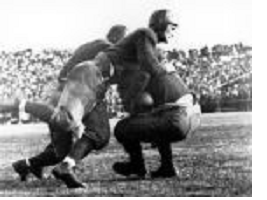 This year's
Eastern representative at the Tournament of Roses game was
Pennsylvania, coming in at 7-2-1. In mid-October, Penn's faculty had
already approved a trip West to play Cal over the Christmas holidays,
but that game was supplanted by this one. 26,000 fans attended, a huge
jump from the number at the previous year's rainy game. Penn was a
heavy favorite to win, even amongst Western newspapers and coaches.
Penn coach Bob Folwell was so confident that he invited Oregon coach
Hugo Bezdek to a Penn practice, and showed him a reverse double pass
play. Oregon then used that very play to score the game's opening (and
ultimately deciding) touchdown.
This year's
Eastern representative at the Tournament of Roses game was
Pennsylvania, coming in at 7-2-1. In mid-October, Penn's faculty had
already approved a trip West to play Cal over the Christmas holidays,
but that game was supplanted by this one. 26,000 fans attended, a huge
jump from the number at the previous year's rainy game. Penn was a
heavy favorite to win, even amongst Western newspapers and coaches.
Penn coach Bob Folwell was so confident that he invited Oregon coach
Hugo Bezdek to a Penn practice, and showed him a reverse double pass
play. Oregon then used that very play to score the game's opening (and
ultimately deciding) touchdown.| Ballard Meteors | 28-0 | |
| Bremerton Navy | 62-0 | |
| Whitman | 37-6 | |
| at Oregon (7-0-1) | 0-0 | #6 |
| Oregon State (4-5) | 35-0 | |
| at California (6-4-1) | 13-3 | |
| California (6-4-1) | 14-7 |
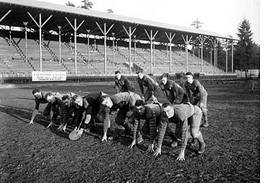 This
is the last of a record 9 straight unbeaten seasons for Washington and
their coach, Gil Dobie. I previously covered them in my articles for 1910, 1913, and 1915. This year guard Louis Seagrave was a nonconsensus All American, Washington's first.
This
is the last of a record 9 straight unbeaten seasons for Washington and
their coach, Gil Dobie. I previously covered them in my articles for 1910, 1913, and 1915. This year guard Louis Seagrave was a nonconsensus All American, Washington's first.| Ohio Wesleyan (2-3-2) | 12-0 | |
| Oberlin (0-7) | 128-0 | |
| at Illinois (3-3-1) | 7-6 | (#26-35) |
| Wisconsin (4-2-1) | 14-13 | (#26-35) |
| Indiana (2-4-1) | 46-7 | |
| at Case (5-5) | 28-0 | |
| Northwestern (6-1) | 23-3 | (#26-35) |
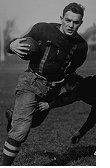 This
was 7-0
Ohio State's first Western Conference (Big Ten) title, and their first
perfect season. They had joined
the conference in 1913, which also happened to be their first year
under Hall of Fame head coach John Wilce, formerly an all conference
fullback and captain at Wisconsin. Wilce coached at Ohio State
1913-1928, going 78-33-9 and winning 3 conference titles, but the heart
of his career was 1916-1920, when he went 31-5-1, won all 3 of those
titles, and took Ohio State to the 1921 Rose Bowl. A practicing doctor,
John Wilce was a professor at Ohio State's medical school for 31 years
after retiring as a football coach, and OSU's student health center is
named for him. He coined the phrase "intestinal fortitude."
This
was 7-0
Ohio State's first Western Conference (Big Ten) title, and their first
perfect season. They had joined
the conference in 1913, which also happened to be their first year
under Hall of Fame head coach John Wilce, formerly an all conference
fullback and captain at Wisconsin. Wilce coached at Ohio State
1913-1928, going 78-33-9 and winning 3 conference titles, but the heart
of his career was 1916-1920, when he went 31-5-1, won all 3 of those
titles, and took Ohio State to the 1921 Rose Bowl. A practicing doctor,
John Wilce was a professor at Ohio State's medical school for 31 years
after retiring as a football coach, and OSU's student health center is
named for him. He coined the phrase "intestinal fortitude."
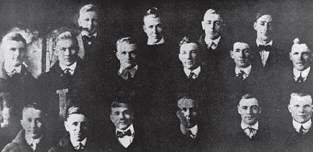
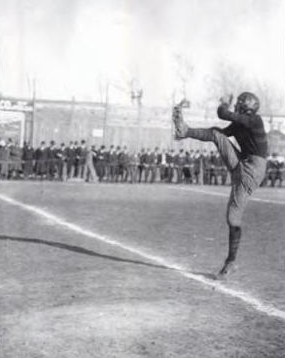 10-0
Henry Kendall College, now known as Tulsa, outscored their opponents
566-40, blowing well past Oklahoma's 472 points for best in the nation.
Their coach, Sam McBirney, was a successful banker who coached Kendall
on the side, and he took them from 0 to 60 very quickly. He first
coached the school in 1908, going 2-3, but things took off when he
returned to the helm in 1914. They went 6-2 that year, losing to
Oklahoma State and Oklahoma, then 6-1-1 in 1915, tying Oklahoma State and losing
to Oklahoma (by just 1 point), and this season they beat both of their
in-state rivals, along with everyone else on their schedule. That was
it for McBirney, who had skyscrapers and a financial empire to build,
and he retired on top of the state's football scene, 10-0 this season
and 24-6-1 overall.
10-0
Henry Kendall College, now known as Tulsa, outscored their opponents
566-40, blowing well past Oklahoma's 472 points for best in the nation.
Their coach, Sam McBirney, was a successful banker who coached Kendall
on the side, and he took them from 0 to 60 very quickly. He first
coached the school in 1908, going 2-3, but things took off when he
returned to the helm in 1914. They went 6-2 that year, losing to
Oklahoma State and Oklahoma, then 6-1-1 in 1915, tying Oklahoma State and losing
to Oklahoma (by just 1 point), and this season they beat both of their
in-state rivals, along with everyone else on their schedule. That was
it for McBirney, who had skyscrapers and a financial empire to build,
and he retired on top of the state's football scene, 10-0 this season
and 24-6-1 overall.| 1) Houlgate (math system) | 4.4 |
| 2) Helms | 4.23 |
| 3) Parke Davis | 4.21 |
| 4) National Championship Foundation | 3.52 |
| 5) Billingsley (math) | 3.51 |